The federal government has reiterated the importance of strong partnerships, accountability and sustainable institutions in advancing ongoing health sector reforms and improving healthcare outcomes for Nigerians.
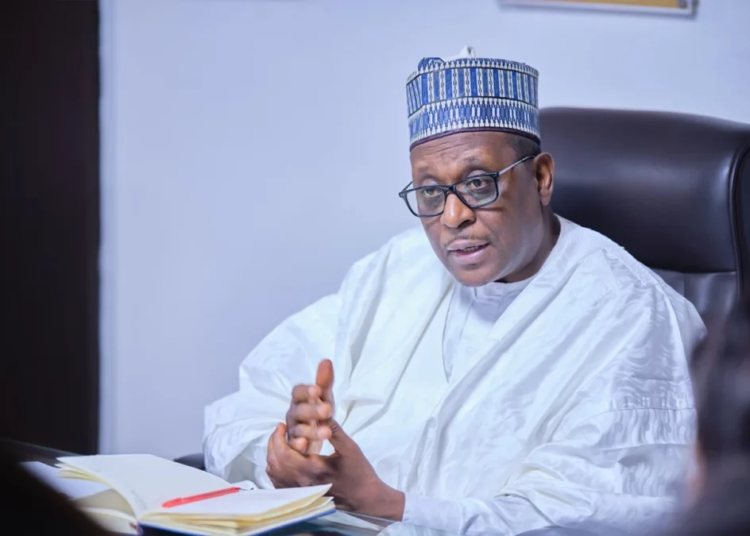
At a stakeholders’ engagement on the contributions of Excellence Community Education Welfare Scheme (ECEWS) to Nigeria’s health sector, held in Abuja, the coordinating minister of Health and Social Welfare, Prof. Muhammad Ali Pate, said the government remains committed to working with credible local institutions to strengthen healthcare delivery across the country.
Represented by Dr Muntaqa Umar-Sadiq, the minister said one of the key lessons from the engagement was the need to build institutions capable of delivering long-term impact and supporting the government’s human capital development agenda.
He said few organisations in the country’s health and education sectors have demonstrated sustained impact over a long period, noting that such institutions play a critical role in complementing government efforts.
“We do not have too many institutions, whether in the health sector or education sector, that have endured this long in terms of sustainability, efficiency and impact. This is important for advancing Nigeria’s human capital development goals,” he said.
He noted that the values of sustainability, integrity, efficiency and measurable impact being promoted by some development organisations align with the Federal Government’s ongoing health sector reform programme and sector-wide approach.
The minister said the government would continue to support partnerships that strengthen health systems and expand access to healthcare services, particularly at the community level, adding that local institutions must be encouraged to scale their interventions and inspire the emergence of other indigenous organisations capable of delivering similar results.
Also speaking at the event, Minister of Humanitarian Affairs, Dr. Bernard Doro, stressed the need for greater accountability in humanitarian and development interventions.
Doro said organisations operating within the humanitarian ecosystem must ensure that resources and services reach vulnerable populations at the grassroots.
“Our work has to do with vulnerable people, and accountability is very key. We need to ensure that whatever we do gets to the last mile,” he said.
The minister also called on development partners to continue supporting credible local organisations that have demonstrated transparency and effective service delivery.
Chairman of the ECEWS Board, Prof. EnoAbasi Urua, said the organisation had spent the last quarter century transforming lives through interventions in education, healthcare, and economic empowerment.
According to her, ECEWS began by providing scholarships and educational support before expanding into the health sector, particularly in the fight against HIV/AIDS at a time when the disease claimed many lives.
She noted that through the provision of antiretroviral drugs and other health interventions, thousands of Nigerians were able to regain hope and live healthier lives.
“From HIV/AIDS, we moved into tuberculosis, malaria and several other health programmes. We have been able to do this across 19 states of the federation and hope to reach even more communities in Nigeria and beyond in the years ahead,” she said.
The Chief Executive Officer of ECEWS, Dr. Andy Eyo, attributed the organisation’s 25 years of success in Nigeria’s humanitarian, education and health sectors to integrity, patriotism, competence and a commitment to serving the Nigerian people.
Eyo urged non-governmental organisations (NGOs) to adopt selfless leadership and strengthen institutional capacity to improve service delivery, particularly in the health sector.
Reflecting on the organisation’s journey, Eyo said ECEWS had remained focused on its vision despite numerous challenges, including insecurity, dwindling resources and economic difficulties.
The engagement brought together senior government officials, development partners, diplomats, public health experts, healthcare leaders, civil society organisations and academics to discuss efforts aimed at improving health outcomes and strengthening healthcare systems in Nigeria.